

The Fundamental Difference
Choosing between term life and whole life insurance is one of the most important decisions you'll make when protecting your family. Both serve different purposes, and understanding the distinction is crucial.
Term Life Insurance: Temporary Protection
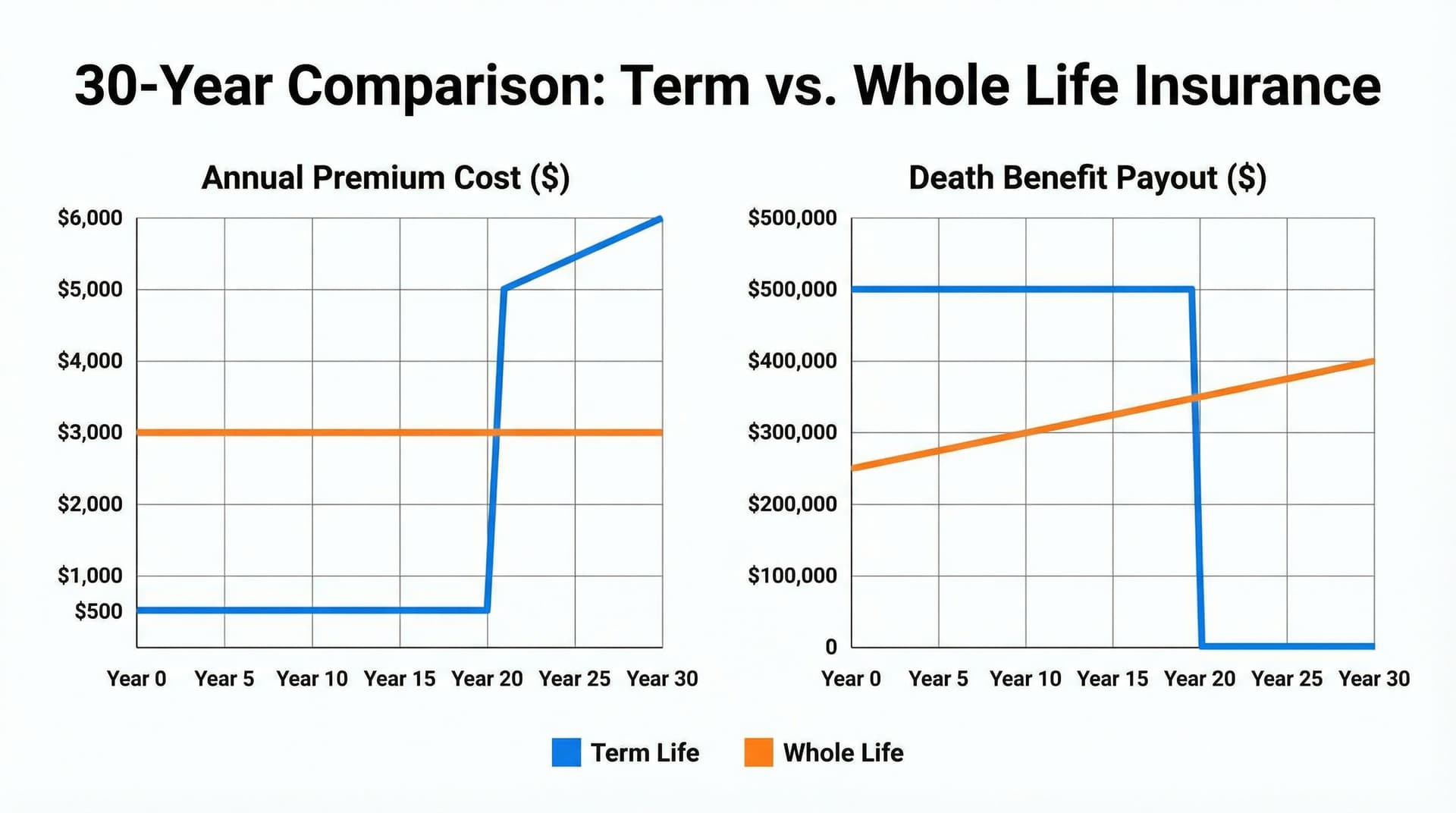
Term life insurance provides coverage for a specific period (the "term") - typically 10, 20, or 30 years. If you pass away during the term, your beneficiaries receive the death benefit. If you outlive the term, the policy expires with no payout.
Whole Life Insurance: Lifelong Coverage
Whole life insurance provides permanent coverage for your entire life, as long as premiums are paid. It also builds cash value over time that you can borrow against or withdraw.
Term Life Insurance: Pros and Cons
Advantages
- Significantly lower premiums - Often 5-10x cheaper than whole life for the same death benefit
- High coverage amounts - Can afford $500,000+ in coverage affordably
- Simple and straightforward - Easy to understand, no cash value component
- Ideal for specific needs - Perfect for mortgage protection or income replacement during working years
Disadvantages
- Temporary coverage - Policy expires after the term ends
- No cash value - You're paying for pure insurance protection only
- Renewal costs - If you need to renew, premiums increase significantly with age
- No benefit if you outlive the term - You've paid premiums with nothing to show for it
Whole Life Insurance: Pros and Cons
Advantages
- Guaranteed lifetime coverage - Never expires as long as premiums are paid
- Fixed premiums - Never increase regardless of age or health changes
- Cash value growth - Builds savings you can access through loans or withdrawals
- Estate planning tool - Provides guaranteed payout for heirs
- Forced savings - Disciplined way to build financial assets
Disadvantages
- Much higher premiums - Can cost 5-10x more than term for equivalent death benefit
- Lower coverage amounts - Expensive, so most people buy less coverage
- Complex policies - More moving parts to understand
- Slow cash value growth - Takes years to build significant cash value
- Surrender charges - Penalties if you cancel early
Cost Comparison Example
Let's compare costs for a healthy 40-year-old purchasing $250,000 in coverage:
Term Life (20-year term)
- Monthly premium: ~$25-$40
- Total paid over 20 years: $6,000-$9,600
- Coverage expires at age 60
Whole Life
- Monthly premium: ~$200-$300
- Total paid over 20 years: $48,000-$72,000
- Coverage continues for life
- Cash value after 20 years: ~$35,000-$45,000
Which Should You Choose?
Choose Term Life Insurance If:
- You need maximum coverage at minimum cost
- You want to protect your family during working years only
- You're covering a specific debt like a mortgage
- You have a limited budget for insurance
- You're younger and building other financial assets
Choose Whole Life Insurance If:
- You need guaranteed lifelong coverage
- You want to build cash value as a financial asset
- You're planning for estate taxes or leaving an inheritance
- You have final expense needs as a senior
- You can afford higher premiums for permanent protection
Consider Combining Both
Many financial advisors recommend a combination strategy:
- Term life for high coverage during working years (income replacement, mortgage protection)
- Whole life or final expense for lifelong coverage and funeral costs
This approach provides maximum protection when you need it most, plus guaranteed coverage for end-of-life expenses.
Final Expense: A Whole Life Alternative
For seniors focused primarily on covering funeral costs, final expense insurance offers a middle ground:
- Smaller coverage amounts ($5,000-$35,000) make it more affordable than traditional whole life
- Guaranteed acceptance options available regardless of health
- Permanent coverage like whole life, but specifically sized for final expenses
- No medical exam required for most policies
Making Your Decision
The "right" choice depends on your unique situation:
- Age and health status
- Family obligations and dependents
- Budget and financial goals
- Existing assets and insurance coverage
- Time horizon for protection needs
Questions to Ask Yourself
- What is the primary purpose of this insurance? (Income replacement vs. estate planning)
- How long do I need coverage? (Until kids graduate vs. lifetime)
- What can I afford in monthly premiums?
- Do I have other investments building cash value?
- Will my need for coverage decrease or stay constant over time?

Key Takeaways
Choose Term Life if you need maximum coverage during specific high-need years (raising children, paying mortgage) and want to invest the premium savings elsewhere.
Choose Whole Life if you want guaranteed lifetime coverage, value the forced savings aspect, need coverage for estate planning, or want to build cash value alongside protection.
Consider Both if your budget allows—high-amount term for temporary needs plus a smaller whole life policy for permanent coverage and final expenses.
Related Articles
- Understanding Final Expense Insurance - Complete guide for seniors
- Guaranteed Issue Life Insurance Explained - No health questions coverage
- How to Choose a Life Insurance Beneficiary - Essential naming guide
Important Reminders
- Review your coverage needs every 3-5 years as life circumstances change
- Don't let term policies lapse if you still need coverage—explore conversion options
- Understand that whole life policies take 10-15 years to build significant cash value
- Compare quotes from multiple carriers as rates vary significantly
- Work with licensed agents who represent multiple insurance companies
This article provides general educational information. Insurance products, features, and availability vary by state and carrier. This is not financial or legal advice. Consult with licensed professionals for guidance specific to your situation.